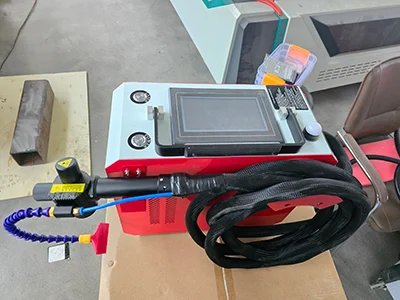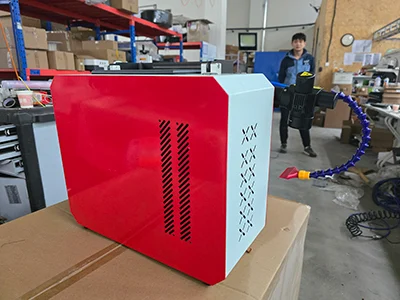
What Materials And Surfaces Can Be Cleaned With Laser Cleaning Machines?(2)

Benefits Over Traditional Methods Laser cleaning is redefining how industries approach surface preparation and contaminant removal. Unlike traditional methods, such as abrasive blasting, chemical stripping, or dry-ice blasting, laser cleaning is a non-contact, highly selective process that minimizes waste, environmental impact, and damage to the substrate. While conventional methods have served industry for decades, they […]

What Materials And Surfaces Can Be Cleaned With Laser Cleaning Machines?(1)

Principles of Laser Cleaning Laser cleaning is built on the controlled interaction between pulsed laser radiation and material surfaces. It removes unwanted layers, such as oxides, paints, grease, and residues, without mechanical contact, abrasives, or chemicals. The cleaning process operates through two primary physical mechanisms: photo-thermal and photo-mechanical effects, both of which are influenced by […]

Laser Cutting VS Plasma Cutting 4

Safety Considerations Both laser and plasma cutting involve high temperatures, intense energy, and hazardous byproducts, making safety a critical part of operating either system. Each method carries its unique risks that must be managed through proper equipment, training, and facility planning. Understanding the specific dangers of optical radiation, electrical hazards, airborne contaminants, and fire risk […]

Laser Cutting VS Plasma Cutting 3

Cutting Speed and Productivity Cutting speed directly influences productivity, especially in high-volume manufacturing and fabrication environments. Faster cutting means more parts per hour, lower labor costs, and shorter lead times. While both laser and plasma cutting can handle demanding workloads, their speed profiles differ depending on material type, thickness, and system power. Understanding how each […]

Laser Cutting VS Plasma Cutting 2

Material Compatibility and Thickness Range One of the most critical factors in choosing between laser cutting and plasma cutting is how well each method handles different materials and thicknesses. While both are capable of cutting a wide range of metals, their performance varies significantly depending on the type, thickness, and intended finish of the material. […]

Laser Cutting VS Plasma Cutting 1

Fundamentals of Cutting Technologies To compare laser cutting and plasma cutting effectively, it’s essential to understand the core mechanics behind each method. While both are thermal cutting processes designed to shape and separate metal, they operate using different technologies and physical principles. Principles of Laser Cutting Laser cutting uses a concentrated beam of light to […]

Application of laser welding on stainless steel 8

Summary Laser welding has become a leading method for joining stainless steel thanks to its precision, low heat input, and suitability for automation. When set up correctly, it delivers deep penetration, minimal distortion, and clean welds that preserve stainless steel’s corrosion resistance. Successful results depend on more than just laser power—material preparation, joint design, shielding […]

Application of laser welding on stainless steel 7

Defects: Causes and Fixes Laser welding stainless steel offers unmatched precision, but defects can still occur when material preparation, process parameters, or shielding gas delivery are not fully optimized. Unlike arc welding, laser welding’s small molten pool solidifies extremely quickly, so even minor disruptions in energy delivery or shielding can produce visible or hidden flaws. […]

Application of laser welding on stainless steel 6

Distortion, Residual Stress, And Fixturing Laser welding’s concentrated heat input significantly reduces distortion compared to MIG or TIG welding, but stainless steel’s thermal expansion rate (~17 µm/m·℃) is still almost 1.5× that of carbon steel. This means even small temperature changes can cause measurable movement. Residual stresses form when the weld metal and surrounding base metal […]

Application of laser welding on stainless steel 5

Heat Input, Cooling Rate, And Metallurgical Control Laser welding is inherently a low heat input, high cooling rate process, which is one reason it’s so effective for stainless steel. But “low heat” is not automatically “good” — the wrong heat input or cooling profile can lead to incomplete fusion, excessive ferrite, or microstructural defects that […]